New Zealand's summer runs from December to February, with average highs of about 20°C to 24.5°C in most towns in January and February (NIWA). The crowds peak when schools are out, from about 19 December 2026 to late January or early February 2027, and DOC campsites such as Tōtaranui charge peak rates from 26 December to 8 February. To dodge them, travel in early December or from mid-February into March, start popular hikes early, and book ferries, vans and campsites months ahead.
On this page
Key facts
- Summer months
- December, January, February
- January highs (NIWA)
- Auckland 23.1°C, Napier 24.5°C, Christchurch 22.7°C, Queenstown 21.8°C
- School summer holidays
- Term 4 ends by 18 Dec 2026; Term 1 starts 28 Jan to 3 Feb 2027
- Peak campsite pricing
- 26 December to 8 February at sites like Tōtaranui and Pelorus Bridge
- Summer public holidays 2027
- 1 and 4 Jan, Wellington Anniversary 25 Jan, Auckland Anniversary 1 Feb, Waitangi Day observed 8 Feb
- Beach safety
- Swim between the red and yellow flags; patrols started Labour Weekend 2026
- Checked
- As at November 2026
Summer is when New Zealand is at its most generous: long evenings, warm lakes, beaches that are actually swimmable and a festival most weekends. It is also when most New Zealanders take their main holiday, which means the best campsites, ferries and walks get busy fast.
This guide explains how the summer months differ, which regions shine, and how to time your trip so you get the weather without the queues. Dates are for summer 2026/27, checked in November 2026.
Summer months explained
Summer is December, January and February, and each month feels different.
| Month | Weather | Crowds |
|---|---|---|
| December | Early summer, warming up | Quiet until schools finish by 18 December, then busy |
| January | Usually the warmest, longest holiday month | Peak: New Zealand families on holiday until late January |
| February | As warm as January | Schools back from 28 January to 3 February; events peak |
| March (bonus) | Still warm, a little cooler | Quieter, many events continue |
NIWA’s long-term averages (1981 to 2010) for daily highs:
| Place | January | February | March |
|---|---|---|---|
| Auckland | 23.1°C | 23.7°C | 22.4°C |
| Napier | 24.5°C | 24.2°C | 22.7°C |
| Wellington | 20.3°C | 20.6°C | 19.1°C |
| Nelson | 22.4°C | 22.6°C | 21.0°C |
| Christchurch | 22.7°C | 22.1°C | 20.5°C |
| Queenstown | 21.8°C | 21.8°C | 18.8°C |
| Dunedin | 18.9°C | 18.6°C | 17.3°C |
Rain still matters. NIWA’s January averages are just 38.3 mm in Christchurch but 248.3 mm in Hokitika and 722 mm at Milford Sound.
Public holidays add extra busy weekends. For 2027, Employment New Zealand lists New Year’s Day (Friday 1 January), the day after New Year’s Day (observed Monday 4 January), Wellington Anniversary Day (Monday 25 January), Auckland Anniversary Day (Monday 1 February) and Waitangi Day (Saturday 6 February, observed Monday 8 February).
Best regions
Where you go depends on what you want from summer:
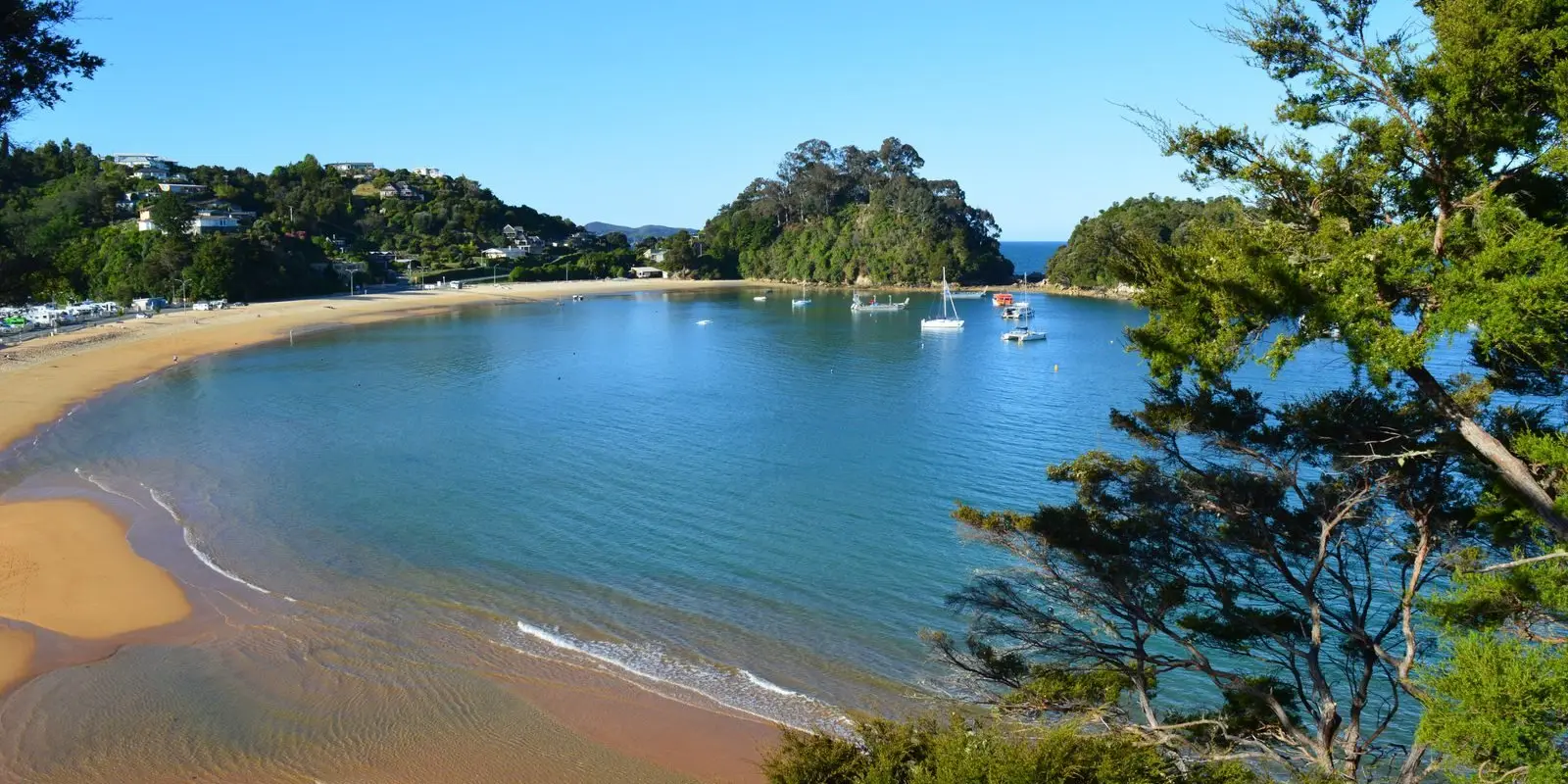
- Nelson Tasman and Marlborough. Sunny, warm (Nelson averages 22.4°C in January) and full of beaches, with Abel Tasman National Park on the doorstep. DOC’s Tōtaranui campground sits behind a golden beach at the northern end of the park.
- Hawke’s Bay. Napier is the warmest place in the table above, with an average January high of 24.5°C, and hosts the Art Deco Festival in February.
- Northland and Auckland. Islands, harbours and warm water. Our Bay of Islands guide covers the classic Northland trip.
- Central Otago and the Southern Lakes. Hot, dry days, lake swimming and big walks around Queenstown and Wānaka.
- The Mackenzie. Lake Tekapo and Aoraki/Mount Cook, with long evenings for stargazing. Nights are cool even in summer.
- The West Coast and Fiordland. Spectacular but wet. Go for the rainforest, waterfalls and glaciers, and pack for rain.
Beaches
New Zealand’s beaches are at their best from Christmas, when the water has had a few weeks to warm up. A few things to know:
- Swim between the flags. Surf Life Saving New Zealand’s patrols started on Labour Weekend (Saturday 24 October 2026), with more beaches added over the following weeks. Lifeguards place red and yellow flags in the safest area for the day’s conditions.
- If in doubt, stay out. Rips and changing conditions catch out even good swimmers.
- Know how to get help. Alert a lifeguard if one is on patrol, or call 111 and ask for Police.
- Check SafeSwim before you go for patrolled beaches and swimming conditions.
Many of the best beach campsites are DOC sites. At Tōtaranui in Abel Tasman you camp next to the golden sands of the beach, but there are no rubbish facilities, so you must take everything out with you.
Hikes
Summer is prime time for walking, with the longest days and the least snow on alpine tracks.
- Start early. DOC warns that Roys Peak can be very hot in summer, with no shade or water, recommends avoiding the hottest part of the day, and says the car park gets very busy.
- Book overnight walks. Great Walk huts and campsites must be booked for the summer season; day walks need no booking.
- Know the closures. Isthmus Peak near Wānaka is closed for fawning from 20 November to 20 December.
- Carry water and sun protection. DOC recommends plenty of both on Roys Peak, and the same applies on any exposed track.
Classic summer day walks include the Hooker Valley (10 km, 3 hours), Roys Peak (16 km, 5 to 6 hours) and Rangitoto Summit (7 km, 2 hours). For the most famous one-day walk, see our Tongariro Alpine Crossing guide.
Insider tip: the biggest crowds are on the same five or six famous walks. Start at first light and you will share them with a handful of people; arrive at 11 am and you will queue for photos. If you cannot start early, pick a nearby alternative, like Isthmus Peak for Roys Peak outside its December closure.
Camping in summer
DOC campsites are the cheapest way to stay near beaches and lakes, but summer is when they fill. DOC tells campers to book well in advance for the peak period from 1 December to 28 February and for public holiday weekends, and says no spaces are kept for campers arriving without a booking at bookable sites.
Peak rules at three popular sites, as at November 2026:
| Campsite | Standard adult rate | 26 Dec to 8 Feb | Extra summer rules |
|---|---|---|---|
| Tōtaranui, Abel Tasman | $18 per night | $20 per night | $40 minimum per night, 14-night maximum stay, up to 850 campers |
| Pelorus Bridge, Marlborough | $25 per night | $27 per night | 3-night minimum from 24 to 31 December |
| White Horse Hill, Aoraki/Mount Cook | $20 per night | $20 per night | Busiest from Christmas to mid-February |
The DOC Campsite Pass cannot be used at Tōtaranui or Pelorus Bridge from 26 December to 8 February. At White Horse Hill, DOC suggests visiting from mid-February to Easter, when there are generally fewer people.
Events
Summer is festival season. Highlights for 2026/27, with links to our events calendar:
- New Year: Rhythm and Vines in Gisborne (28 to 31 December), Rhythm and Alps near Wānaka and Northern Bass near Mangawhai.
- January: the ASB Classic tennis in Auckland (4 to 16 January), the World Buskers Festival in Christchurch (21 to 31 January) and the TSB Festival of Lights in New Plymouth until 24 January.
- February: Waitangi Day at the Treaty Grounds (6 February), Napier’s Art Deco Festival (18 to 21 February) and Te Matatini, the national kapa haka festival (23 to 27 February).
Booking tips and how to dodge the crowds
- Shift your dates. The quietest summer weeks are early December, before schools finish, and mid-February onwards, after they go back.
- Book the bottlenecks first. Cook Strait ferries, campervans, Great Walk huts and popular DOC campsites have fixed capacity. DOC says no spaces are kept for walk-ins at booked campsites like White Horse Hill.
- Expect peak prices. DOC campsites like Tōtaranui and Pelorus Bridge charge more from 26 December to 8 February (see below). Campervan rates also climb steeply in summer; our campervan costs guide shows February rates around four times those of May.
- Avoid long weekends for long drives: 1 to 4 January, Wellington and Auckland anniversary weekends and Waitangi weekend.
- Stay a little off the main route. Smaller towns near the famous spots are often easier and cheaper to book.
- Plan your route around the weather. Our 14-day South Island road trip has room to swap days if the West Coast is wet.
FAQ
When is summer in New Zealand?
When are New Zealand's summer school holidays?
How do I avoid crowds in New Zealand in summer?
Is February a good time to visit New Zealand?
Do I need sunscreen in New Zealand?
Sources
Last checked 11 November 2026
- Mean daily maximum temperatures · NIWA
- Mean monthly rainfall · NIWA
- School terms and holidays dates · Ministry of Education
- Public holidays and anniversary dates · Employment New Zealand
- Patrols return this weekend: how to stay safe at the beach this summer · Surf Life Saving New Zealand
- Tōtaranui Campground · Department of Conservation
- Pelorus Bridge Campground · Department of Conservation
See more sources (4)See fewer
- White Horse Hill Campsite · Department of Conservation
- Roys Peak Track · Department of Conservation
- Hooker Valley Track · Department of Conservation
- Rangitoto Summit Track · Department of Conservation