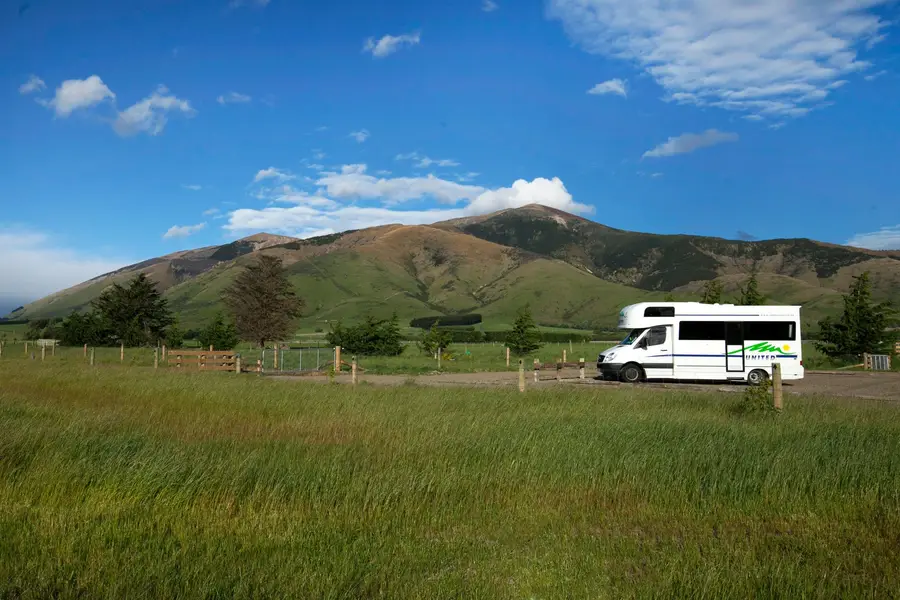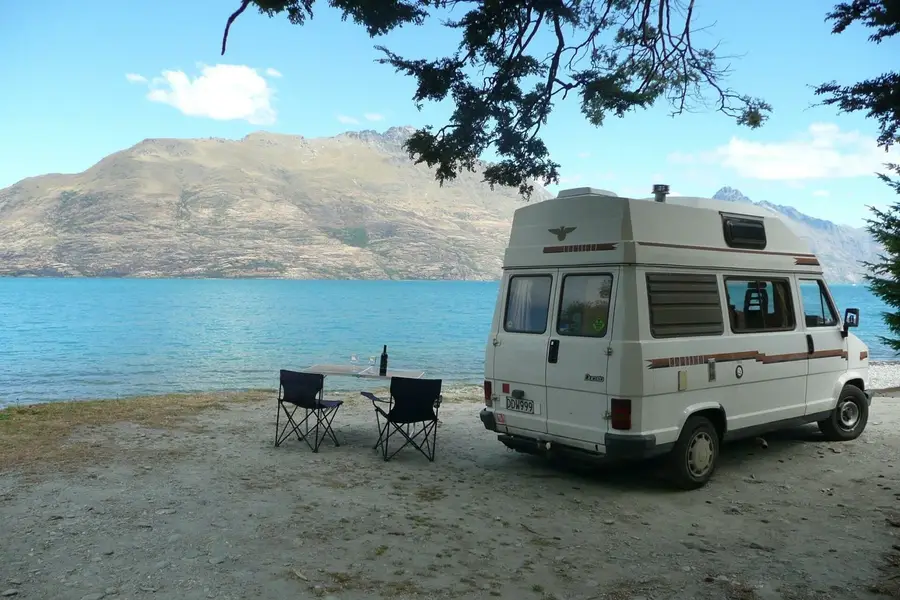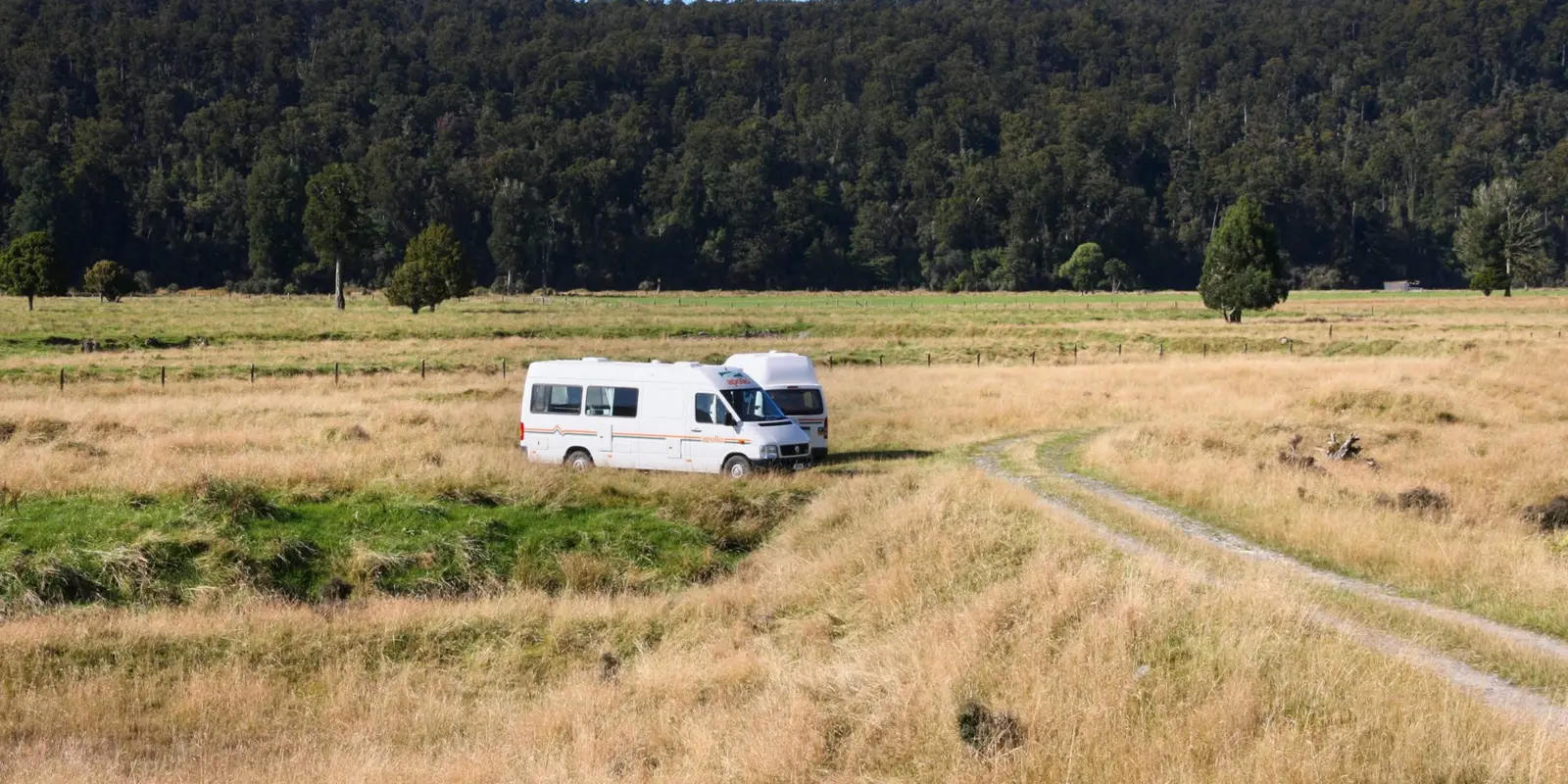
The base rate swings hugely with the season: on a Jucy quote taken in November 2026, a 3-berth Chaser averaged $88 a day in May 2027 and $327 a day in February 2027. On top of that, budget for excess cover ($30 to $93 a day at the brands we checked), fuel, road user charges on diesel vans (NZTA's rate is $76 per 1,000 km), and campsites (free to $25 per adult a night at DOC sites). Travel outside summer, return the van where you got it, or grab a relocation deal to pay much less.
On this page
Key facts
- Biggest price factor
- Season: a Chaser was about 3.7 times dearer in February than May
- Excess cover
- About $30 to $93 a day, depending on brand and van
- Standard excess with no cover
- $3,000 to $7,500 at the brands we checked
- Diesel road user charges
- $76 per 1,000 km (NZTA, light vehicles up to 3.5 t)
- DOC campsites
- Basic free, standard $10 to $20, serviced $25 per adult
- Freedom camping fine
- $400 for a non-self-contained vehicle
- Relocation deals
- From $1 a day (Transfercar)
- Checked
- As at November 2026
Campervan hire prices in New Zealand look simple until you get to the checkout. The daily rate is only the start: insurance, bonds, road user charges, fuel, campsites and ferry fares all pile on. This guide breaks down every cost with real numbers from rental companies’ own terms and from a live booking engine, all as at November 2026.
We do not invent “average daily totals”. Where a cost depends on your choices, we show you the inputs so you can do the sum for your own trip.
The quick answer
For a two-person van, expect a base rate of roughly $35 to $90 a day in the cool months and $145 to $350 a day in peak summer, based on Jucy quotes we took on 11 November 2026. Then add:
- Excess cover: about $30 to $93 a day, or accept a $3,000 to $7,500 excess.
- Fuel, and road user charges if the van runs on diesel.
- Campsites: free to $25 per adult a night at DOC sites; holiday parks cost more.
- Ferry fares if you cross Cook Strait.
- Extras such as chairs, heaters, additional drivers and linen.
What drives the daily rate
Four things move the price far more than the badge on the van:
- Season. This is the big one, covered in the next section.
- Size. A 6-berth motorhome costs more than a 2-berth van, but on a per-person basis it can be cheaper for a group.
- One-way or return. One-way hires often cost more. Our Queenstown to Christchurch quotes for May 2027 were $119 to $165 a day, against $33 to $88 for a Christchurch return on the same dates.
- Self-contained or not. Only certified self-contained vans with a green warrant can freedom camp on public land, which can save on campsites. Non-self-contained vans are cheaper to hire but need a campsite every night.
Peak vs off-peak seasons
Here is the same 15-day Christchurch return hire with Jucy, priced on the same day for two different months:
| Van | 10 to 24 May 2027 (per day) | 1 to 15 February 2027 (per day) |
|---|---|---|
| Cloudbreak (2-berth, not self-contained) | $33.25 | $150 |
| Crib (2-berth, not self-contained) | $35 | $145 |
| Condo (4-berth, self-contained) | $75 | $349.80 |
| Chaser (3-berth, self-contained) | $88 | $326.91 |
| Big Kahuna (6-berth motorhome) | $107.25 | $400 |
These are base rates before insurance and extras, quoted on jucy.com on 11 November 2026. Prices change daily, but the pattern is consistent: summer can cost three to four times as much as late autumn.
Insider tip: if you are flexible, price the same trip a fortnight earlier or later. School holidays and the Christmas to January peak push rates up fast, and a shift of just a week or two can save hundreds of dollars.
Insurance and bond options
Every rental includes basic insurance with a large excess (the most you pay if the van is damaged). You can pay a daily fee to cut it. Here is what four brands publish for New Zealand:
| Brand | Included cover (excess) | Middle option | Top option |
|---|---|---|---|
| Jucy (Chaser, Condo) | $5,000 | $50/day, $1,500 excess | $65/day, $0 |
| Jucy (Crib, Cloudbreak) | $3,000 | $35/day, $1,500 | $50/day, $0 |
| Jucy (Big Kahuna) | $7,500 | $60/day, $2,500 | $75/day, $0 |
| Britz (HiTop, Voyager) | $5,000 | High Road $57/day, $0 | |
| Britz (other models) | $7,500 | High Road $67/day, $0 | |
| Spaceships (Classic Estima) | $5,000 bond | Partial $30/day, $3,000 bond | Stress-Free $40/day, $0 |
| Wilderness | $7,500 | Extra Cover | Full Cover |
Britz also sells bundled Value Pack ($67 or $77 a day) and Platinum ($82 or $93 a day) options for travel from 1 April 2026 to 31 March 2027, and caps the daily charge at 50 days.
How the bond works differs by brand. Jucy holds a bond equal to your excess (just $1 with its top cover on a credit card, but $300 on a debit card regardless). Spaceships freezes the bond on your card rather than charging it. Wilderness takes no bond on a credit card, but $7,500 otherwise.
Read the exclusions. Jucy’s excess cover is void on unsealed roads, and at Spaceships only the top Stress-Free option covers gravel-road damage.
Fuel and road user charges
Petrol vans pay fuel tax at the pump, so your only cost is fuel. Diesel vans also pay road user charges (RUC), because diesel in New Zealand is not taxed at the pump. NZTA’s rate for light vehicles (powered, two axles, up to 3,500 kg) is $76 per 1,000 km.
Rental companies recover this from you:
- Jucy charges $0.08 per km on diesel vans, such as the Big Kahuna.
- Britz lists a RUC recovery fee on its NZ fleet.
- Wilderness includes RUC recovery with its Full Cover option.
So 2,000 km in a diesel Jucy adds about $160 on top of the fuel. Fuel prices move weekly; MBIE publishes national averages every week, and remote areas can cost more.
Tank sizes help you plan stops: Jucy’s Crib holds 60 L, and the Chaser and Big Kahuna 70 L.
Campsite costs
| Where you sleep | Cost (as at November 2026) |
|---|---|
| DOC basic campsite | Free |
| DOC standard campsite | $10 to $20 per adult per night |
| DOC serviced campsite | $25 per adult per night |
| Holiday parks | Varies by park and season; check each park |
| Freedom camping (self-contained vans only) | Free where allowed |
Freedom camping is where many budgets go wrong. You can only freedom camp on public land in a certified self-contained vehicle with a green warrant, and the standard fine for breaking the rules is $400 (rising to $800 for dumping waste). Our freedom camping rules guide explains where you can and cannot park.
Ferry costs with a campervan
If you cross between the islands, you pay for the vehicle and each passenger. Both Interislander and Bluebridge use dynamic fares that change with demand and vehicle length, so price your exact sailing. Longer motorhomes cost more than small vans, and summer sailings sell out. Jucy, for example, says all its vehicles can travel on Bluebridge.
Our Interislander vs Bluebridge guide compares the two.
Sample budgets
These examples use only the published prices above, for two people over 14 nights. Fuel and food are left out because they depend on your route and habits.
Off-peak couple, Jucy Chaser, May 2027, Christchurch return
| Item | Cost |
|---|---|
| Hire: 14 days at $88 | $1,232 |
| Essentials cover: 14 days at $50 ($1,500 excess) | $700 |
| DOC standard campsites, 7 nights at $15 x 2 adults | $210 |
| Freedom camping in permitted spots, 7 nights | $0 |
| Total before fuel and food | $2,142 |
Peak couple, the same van, February 2027
| Item | Cost |
|---|---|
| Hire: 14 days at $326.91 | $4,577 |
| Comprehensive cover: 14 days at $65 ($0 excess) | $910 |
| DOC standard campsites, 14 nights at $15 x 2 adults | $420 |
| Total before fuel and food | $5,907 |
The difference is almost entirely the base rate.
How to pay less
- Travel in shoulder or off-season. It is the single biggest saving.
- Return the van where you collected it to avoid one-way pricing.
- Look at relocation deals. Companies need vans moved between depots. Transfercar listed 957 relocations when we checked (325 of them campers), including a Christchurch to Auckland campervan with the ferry, a tank of fuel and 4 days included, and Queenstown to Christchurch at $1 a day for 3 days. imoova lists similar trips. The catch: tight dates and fixed routes.
- Use a self-contained van if you will freedom camp legitimately, and mix in free DOC basic sites.
- Compare insurance. A travel policy with rental vehicle excess cover can cost less than the rental company’s daily fee. Read our travel insurance guide first.
- Skip extras you can bring. Chairs, tables and heaters are charged per hire.
FAQ
How much does it cost to hire a campervan in New Zealand per day?
Is it cheaper to hire a campervan or a car and motels in NZ?
Do I need to pay road user charges on a campervan?
What is the cheapest month to hire a campervan in NZ?
Is campervan insurance worth it in NZ?
Sources
Last checked 11 November 2026
- RUC rates and transaction fees · NZ Transport Agency Waka Kotahi
- Campsite categories: facilities and fees · Department of Conservation
- JUCY New Zealand Rental Agreement (from 1 May 2026) · Jucy
- Jucy online booking engine (live quotes taken 11 November 2026) · Jucy
- Liability reduction options · Britz
- Insurance options · Spaceships Rentals
- Rental terms and conditions · Wilderness Motorhomes
See more sources (3)See fewer
- Vehicle relocations · Transfercar
- Relocations in New Zealand · imoova
- Weekly fuel price monitoring · Ministry of Business, Innovation and Employment