In 2026 you can only freedom camp in a vehicle on public land if it is certified self-contained with a green warrant, which needs a toilet permanently fixed inside. Blue warrants are finished. Break the rules and the standard fine is $400, rising to $800 for dumping waste. If your van is not certified, use DOC campsites (basic ones are free) or holiday parks, or a council site that is specifically signposted for non-self-contained vehicles.
On this page
Key facts
- Warrant you need
- Green warrant (blue warrants no longer count)
- Toilet rule
- Must be permanently fixed and usable inside the vehicle
- Standard fine
- $400 infringement, court maximum $1,200
- Dumping waste or damage
- $800 infringement, court maximum $2,400
- No warrant card on show
- $200 infringement
- Free alternative
- DOC basic campsites, no fee
- Who sets local rules
- Councils, DOC and LINZ for their own land
- Checked
- As at November 2026
Freedom camping is one of the best things about a New Zealand road trip. You pull up somewhere ridiculous, boil the kettle, watch the light go pink over a lake, and the whole night costs you nothing. It is also the easiest way to turn a cheap trip into an expensive one, because the rules changed properly in 2023 and the last grace period ran out in June 2026.
Here is how it works now, in plain English, with the actual fines and the official sources at the bottom.
What changed with the self-contained law
In 2023 the government changed the Freedom Camping Act 2011 and the Plumbers, Gasfitters and Drainlayers Act 2006 to create one national system for certifying self-contained vehicles. The two big changes:
- The default flipped. Vehicle-based freedom camping on public land is now restricted to certified self-contained vehicles, unless a site has been specifically set aside for non-self-contained vehicles.
- The certification got serious. The old blue warrant (which allowed portable toilets) was replaced by a green warrant, issued by authorised certification authorities and recorded on a national register that enforcement officers can check on the spot.
There was a transition period. Rental vehicles had to have green warrants to freedom camp from 7 December 2024. Privately owned vehicles had until 7 June 2026, and the Plumbers, Gasfitters and Drainlayers Board has confirmed the blue warrant transition has now ended. So as at November 2026, if a van only has a blue sticker, treat it as not self-contained.
Insider tip: older blog posts and forum threads still talk about blue warrants and portable toilets being fine. They were written before the transition ended. If a post does not mention green warrants, it is out of date.
What counts as certified self-contained
To get a green warrant, a vehicle must have a toilet that is permanently fixed to and usable within the vehicle, plus approved systems for:
- fresh water supply
- wastewater (grey water)
- ventilation
- a sink
- rubbish storage
Size alone does not decide it. Some small vans genuinely meet every requirement and some do not, and certification authorities have to assess each vehicle on its own merits. When it passes, the owner gets a certificate and a green warrant card that must be displayed in the vehicle. Green warrants last four years.
The vehicle is also certified for a set number of people. Squeezing an extra mate into a two-berth to freedom camp is its own offence, with its own fine.
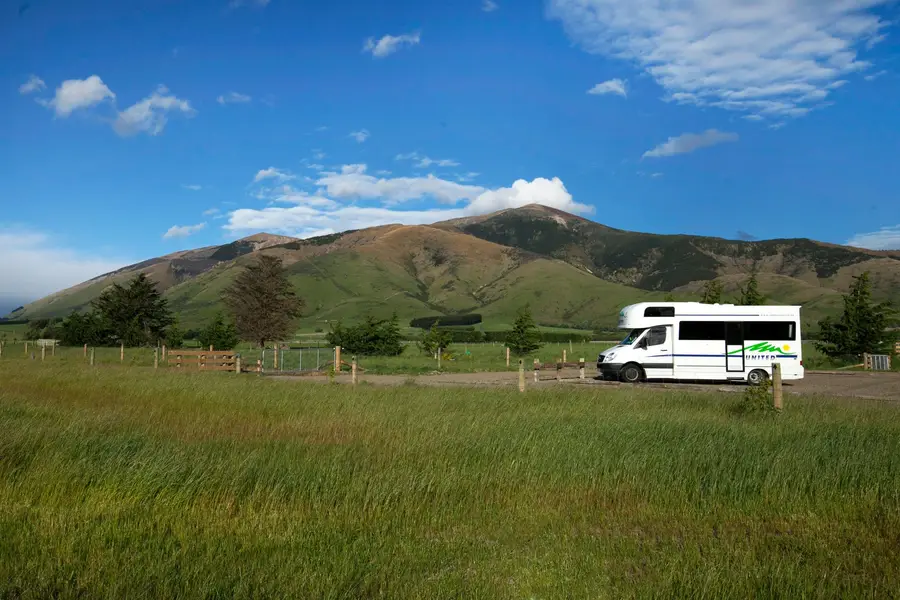
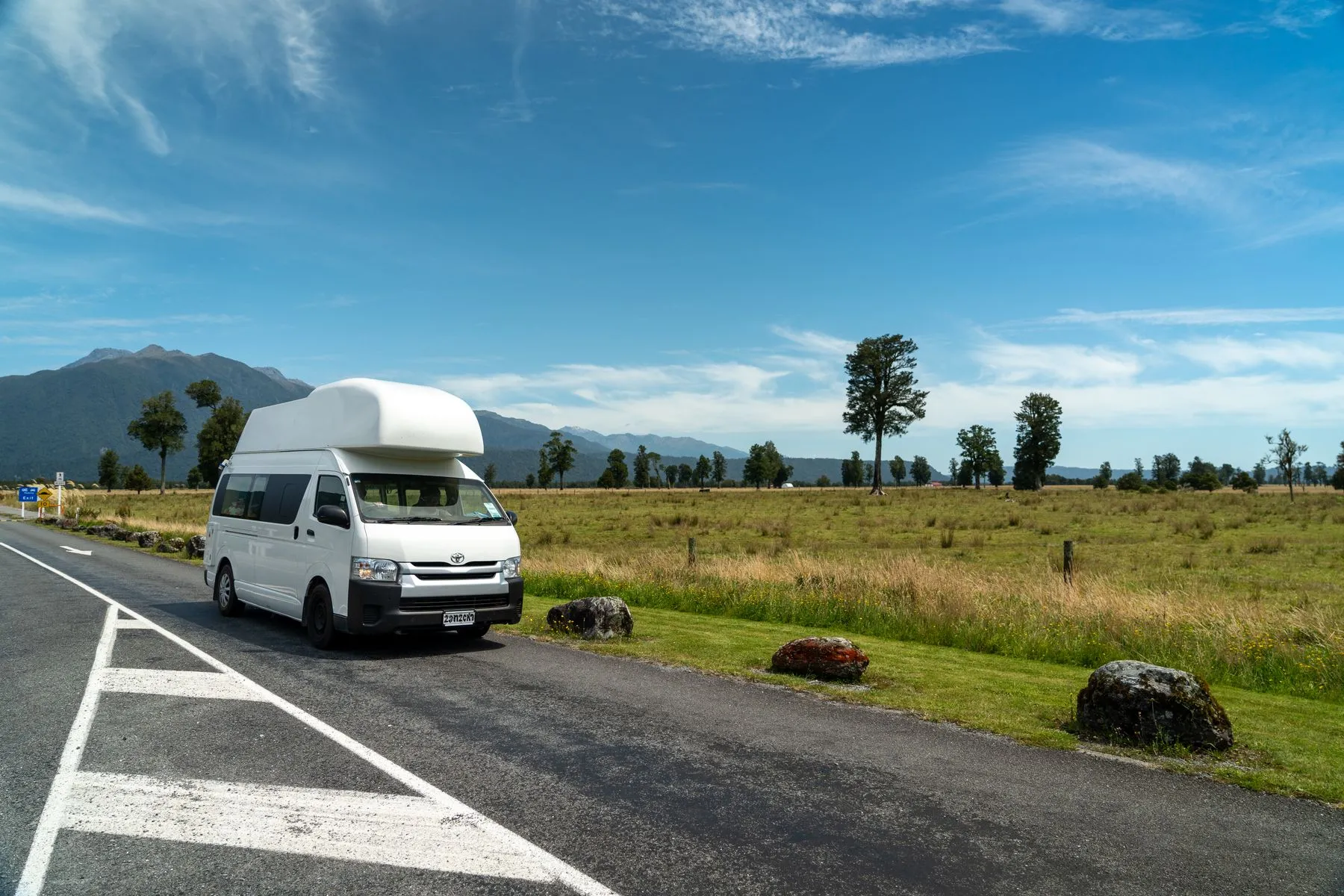 Campervan life on a quiet New Zealand road. Photo: Donovan Kelly via Pexels.
Where you can and cannot freedom camp
Freedom camping is generally allowed on public land unless it is restricted or prohibited by a local bylaw, a notice or other legislation. In practice, three landowners set the rules for their own patch:
| Who | What land | Where to check |
|---|---|---|
| Your local council | Reserves, roadsides, car parks, beachfronts in that district | The council’s freedom camping bylaw and map |
| Department of Conservation (DOC) | Public conservation land, including many lakesides and coastal spots | The DOC website and on-site signs |
| Land Information New Zealand (LINZ) | Some Crown land such as riverbeds and lakebeds | LINZ notices and on-site signs |
The patchwork is the tricky part. A spot can be fine on one side of a river and prohibited on the other because a different council or agency manages it. Popular towns such as Queenstown, Wānaka and Tekapo often have tight restrictions in and around town, while rural areas can be more relaxed.
What the rules do not cover: campgrounds, holiday parks and private land where the owner has said yes. In those places the self-containment requirements do not apply at all, which is why a non-self-contained van can still have a great trip if you plan your nights around paid or DOC sites.
Fines and how rental companies pass them on
These are the infringement fees in the official table published by MBIE, which apply to council, DOC and LINZ land:
| Offence | Infringement fee | Court maximum |
|---|---|---|
| Freedom camping in breach of a bylaw or DOC notice | $400 | $1,200 |
| Freedom camping in a non-self-contained vehicle against the national rule | $400 | $1,200 |
| More people than the vehicle is certified for | $400 | $1,200 |
| Not displaying a warrant card | $200 | $600 |
| Refusing to leave when an officer tells you to | $600 | $1,800 |
| Damaging the area or dumping waste | $800 | $2,400 |
“Making preparations” to freedom camp in breach of the rules (setting up for the night, basically) also carries a $400 fee, so you cannot argue you were just having a sit down with the bed made.
If you are in a rental, the infringement is attached to the vehicle. Rental agreements generally let the company recover fines from the hirer, and some add an admin fee on top, so read the fines section of your rental terms before you sign. The cheapest freedom camping strategy is the one where you never get a ticket.
Finding legal spots
A system that works:
- Start with the council. Search “[council name] freedom camping” and look for the bylaw map. Many councils list designated sites, the number of nights allowed and whether non-self-contained vehicles are permitted anywhere.
- Cross-check DOC. DOC campsites and conservation land pages say clearly whether freedom camping is allowed and for which vehicles.
- Use apps as a finder, not a rulebook. Camping apps are brilliant for discovering spots and reading recent reviews, but rules change and user tips go stale. If the app and the sign disagree, the sign wins.
- Read the sign when you arrive. Signs often list a maximum stay, the allowed vehicle type and where you can park.
- Have a plan B before dark. The best spots fill up early in summer. Know where the nearest DOC site or holiday park is in case your spot is full.
Freedom camping etiquette
The rules exist because a small number of people left a mess in some very beautiful places. Help keep freedom camping alive:
- Use your own toilet or a public one. Never go in the bush near a campsite.
- Empty grey and black water only at dump stations. Dumping waste is the $800 fine, and it is the one that makes locals furious.
- Take your rubbish with you. Council bins at lookouts are not designed for a week of campervan rubbish.
- Arrive late, leave tidy. Keep your setup inside your vehicle footprint where signs require it, and do not light fires unless a site explicitly allows them.
- Be quiet. Many freedom camping areas are near homes or other campers.
Paid alternatives that are still cheap
If your vehicle is not self-contained, or you just want a hot shower, these are the next cheapest options. DOC’s published fees for most sites in each category:
| DOC campsite type | Facilities | Adult per night |
|---|---|---|
| Basic | Basic toilets, water may be untreated | Free |
| Standard | Toilets, water supply, vehicle access | $10 to $20 |
| Serviced (unpowered) | Flush toilets, kitchen, hot showers | $25 |
| Serviced (powered) | As above, with power | $20 to $28 |
Children aged 5 to 17 pay about half, and under-5s are free. Individual campsites can vary and some have seasonal pricing, so check the specific campsite page before you go. DOC also sells a Campsite Pass covering many of its campsites, which is worth comparing if you plan to stay at DOC sites most nights.
Holiday parks cost more but come with powered sites, showers, laundry and kitchens, and many have dump stations. A common budget pattern is to freedom camp most nights in a certified van and book a holiday park every few days to charge everything, do laundry and empty tanks.
Choosing a van if you want to freedom camp
If freedom camping is the plan, the vehicle choice matters more than anything else in this guide:
- Ask for the green warrant in writing when you book, not just “self-contained”.
- Check the number of people it is certified for matches your group.
- Check where the toilet is. A green warrant means a fixed toilet inside, so a very small van that claims to be self-contained deserves a second look.
- Compare the total cost. A cheaper non-self-contained van can end up costing more once you pay for a campsite every night.
The bottom line
Freedom camping in New Zealand is alive and well, but only for certified vehicles and only where the landowner allows it. Get a van with a green warrant, check the council map and DOC page for each night, leave every spot cleaner than you found it, and you will have the best free accommodation in the country.
Crossing between islands? Read our guide to Interislander vs Bluebridge for taking a campervan on the Cook Strait ferry, and our 14-day South Island road trip for a route with overnight ideas.
FAQ
Can I freedom camp in a car or a van without a toilet?
Is my rental campervan allowed to freedom camp?
What happens if I get a freedom camping fine in a rental?
Do the self-contained rules apply at holiday parks?
How do I know whether a spot allows freedom camping?
How long does a green warrant last?
Sources
Last checked 11 November 2026
- Self-contained vehicles: overview of the national system · Plumbers, Gasfitters and Drainlayers Board
- Private vehicle owners: certification requirements · Plumbers, Gasfitters and Drainlayers Board
- Rental vehicle companies: certification requirements · Plumbers, Gasfitters and Drainlayers Board
- SCV updates, including the end of the blue warrant transition · Plumbers, Gasfitters and Drainlayers Board
- Freedom camping infringement offences and penalties (June 2023) · Ministry of Business, Innovation and Employment
- Campsite categories: facilities and fees · Department of Conservation