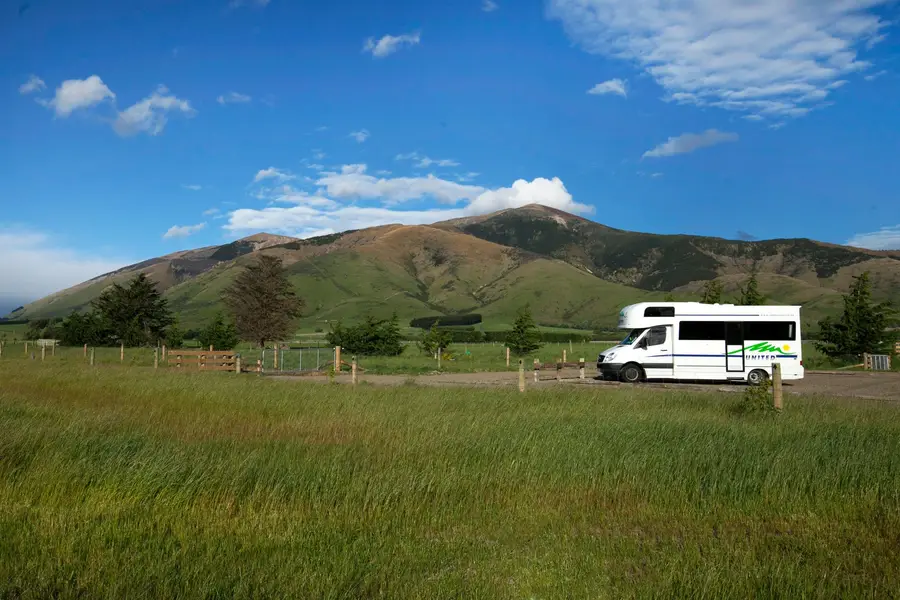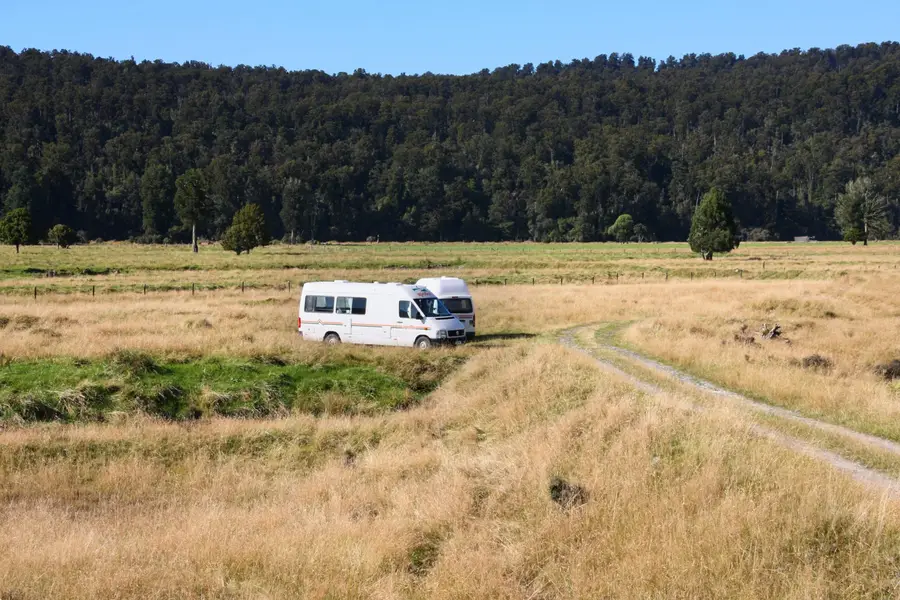
On same-day Jucy quotes for a 14-day Christchurch hire, a basic 2-berth campervan was $35 a day in May 2027 against $25.48 for a small car, and $145 against $124.07 in February 2027. Add two people at a $15 DOC campsite and the van costs about $65 a night in May and $175 in February before cover and fuel. So a car only wins if you can find a room for two under roughly $40 a night in May or $51 in February, which is rare. Pick a car and motels for comfort, short trips or bad-weather months, not to save money.
On this page
Key facts
- 2-berth van vs small car, May 2027
- $35 vs $25.48 a day (Jucy, Christchurch return)
- 2-berth van vs small car, Feb 2027
- $145 vs $124.07 a day (Jucy, Christchurch return)
- DOC standard campsite
- $10 to $20 per adult a night
- Holiday park powered site (example)
- Glentanner: from $43 per adult
- Break-even room price, 2 people
- About $40 a night (May), $51 (February)
- Freedom camping
- Certified self-contained vehicles only
- Prices checked
- As at November 2026 (quotes taken 11 November 2026)
“Campervan or car and motels?” is the most common New Zealand road trip question, and most answers are vibes. This one is arithmetic. We priced a campervan and a rental car from the same company, for the same dates, on the same day, then added real campsite fees to find the room price where each option wins.
All prices are in NZD, as at November 2026. Hire rates are base daily rates quoted on jucy.com on 11 November 2026 for a 14-day Christchurch return hire. Rates move daily, so treat them as a snapshot and run your own dates.
The quick verdict
| You are… | Pick |
|---|---|
| A couple on a budget, 10 days or more | Campervan and DOC campsites |
| Travelling in summer and happy to camp | Campervan, booked early |
| On a short trip (a week or less) | Car and booked rooms |
| Travelling in winter, or hate rain in a tent-sized space | Car and motels |
| A group of four sharing costs | Run the numbers for a 4-berth van vs two rooms |
| Planning lots of city nights | Car and rooms; vans are awkward to park in cities |
Cost comparison
Here are the base daily rates from Jucy, priced the same day for two different travel windows:
| Vehicle | 10 to 24 May 2027 | 1 to 15 February 2027 |
|---|---|---|
| Small Hatch (car) | $25.48 | $124.07 |
| Compact SUV (car) | $120.00 | $126.02 |
| Crib (2-berth van, not self-contained, petrol) | $35.00 | $145.00 |
| Chaser (3-berth van, self-contained, petrol) | $88.00 | $326.91 |
| Condo (4-berth van, self-contained) | $75.00 | $349.80 |
Now add where you sleep. DOC’s standard campsites charge $10 to $20 per adult a night; we use $15 as a mid-point. Two adults is $30 a night.
| Per night, 2 people | May 2027 | February 2027 |
|---|---|---|
| Crib van + DOC standard campsite | $35 + $30 = $65 | $145 + $30 = $175 |
| Small car, before a bed | $25.48 | $124.07 |
| Room price where the car costs the same | About $40 | About $51 |
In other words, the car and motel option only matches the basic van if you can find a room for two for under about $40 a night in May, or $51 in February. We did not quote motel rates for this article, because they swing so much by town and date, but you can test your own route: price your rooms, and if they come in above those numbers, the van is cheaper.
For context, the private holiday park at Glentanner near Aoraki/Mount Cook lists a basic cabin with shared bathrooms at $250 for two, and self-contained cabins from $360. That is one remote holiday park, not a typical motel, but it shows how far above the break-even line a room can be.
The self-contained van case. If you freedom camp in a self-contained Chaser most nights, your sleep is free, so the comparison becomes $88 against $25.48 plus a room in May (break-even room about $63), or $326.91 against $124.07 in February (about $203). Freedom camping is self-contained only and depends on local rules; our freedom camping guide covers where you can park.
The extras that change the maths
The base rate is only part of it. Before you decide, add:
- Excess cover. Jucy’s middle cover on the Crib is $35 a day ($1,500 excess) and its top cover $50 a day ($0 excess). On a 14-day hire that is $490 to $700. Car hires also include an excess that you can pay to reduce; our car rental guide compares the options.
- Fuel. Vans use more fuel than a small hatchback. The Crib and Chaser are petrol, so there are no road user charges.
- Road user charges. Diesel vans pay them; Jucy charges $0.08 per km on diesel models such as the Big Kahuna.
- Holiday park nights. Even with DOC campsites, most van travellers book a holiday park every few days for hot showers, laundry and power. Glentanner’s powered sites start at $43 per adult.
- Ferries. If you cross Cook Strait, longer vehicles cost more.
- Food. A van kitchen saves money on eating out; a motel unit with a kitchenette can do the same.
Our campervan hire costs guide breaks down every one of these with worked examples.
Comfort and sleep
A 2-berth budget van like the Crib is a people carrier with a bed, kitchen and storage built in. You sleep on a fold-out bed, cook at the back door and use campsite toilets. A self-contained van adds a toilet, sometimes a shower, and more height inside.
A motel gives you a proper bed, your own bathroom, a door that locks and somewhere to dry clothes. On a wet West Coast week, that difference matters more than the price.
Be honest about your crew. The Crib’s bed is 1.7 m by 1.2 m and its interior is 1.2 m high, according to our Jucy review, so tall travellers will be curled up and nobody stands inside. If someone in the group sleeps badly or needs a shower every day, budget for some rooms, or choose a bigger van.
Flexibility
The van wins on spontaneity. You can stay longer somewhere you love, chase good weather, or stop early when you are tired, as long as there is a campsite with space. The catch is that the best DOC sites now need booking in summer, so total freedom is limited in peak season.
The car wins on short stops and cities. It is easier to park, quicker to unpack and less stressful in towns. But you are tied to your room bookings, and last-minute rooms in places like Tekapo or Queenstown in summer can be scarce and expensive.
Insider tip: a hybrid works well. Hire a car, book rooms in the expensive or wet places, and carry a cheap tent for a few nights at DOC campsites in the best scenery. You get the view without paying for a van for the whole trip.
Driving
A small car is easy to drive. A campervan is taller, longer and slower, and feels it on windy passes and gravel roads. NZTA’s rules apply to both, with two extra points for vans:
- If your vehicle is over 3,500 kg, your limit is 90 km/h even on a 100 km/h road. Check your van’s weight if you hire a large motorhome.
- If you are slow and a queue builds behind you, NZTA asks you to pull over safely and let traffic pass.
Many rental agreements, for vans and cars alike, restrict unsealed roads or void excess cover on them. Check before you plan a route to a gravel-road campsite.
Seasonal differences
The season changes the answer more than anything else:
- May (late autumn). Van rates were as low as $35 a day on our quote. DOC’s peak season, when some extra campsites need booking, usually runs 1 October to 30 April, so May is outside it. But nights are cold, days are short and a non-self-contained van means walking to a campsite toilet in the dark.
- February (summer). Vans and cars both cost four to five times their May rates on our quotes. Campsites are busy, and DOC says some sites, such as Kidds Bush near Wānaka, are often booked out from Boxing Day to early February.
- Winter (June to August). We did not quote winter dates for this article. Whatever the rates, a car and a heated room is the more comfortable choice, especially if you are skiing or crossing alpine passes where NZTA warns of snow and ice.
Who should pick which
Pick a campervan if:
- You are a couple or friends happy to share a small space.
- Your trip is 10 days or more, so the setup time pays off.
- You want to wake up at lakes, beaches and trailheads.
- You are travelling outside peak summer, when van rates are lowest.
Pick a car and motels if:
- Your trip is a week or less.
- You are travelling in winter, or want a real bed and bathroom every night.
- You plan to spend several nights in cities.
- You have found rooms on your route under the break-even prices above.
Whichever you choose, price your actual dates on the same day for both options, and remember that the cheapest choice is the one that matches how you like to travel.
FAQ
Is it cheaper to hire a campervan or a car in New Zealand?
Is a campervan worth it for a short trip?
Can I sleep in a rental car in New Zealand?
Do I need a self-contained campervan?
What costs do people forget with a campervan?
Sources
Last checked 11 November 2026
- Campervan and car search results, Christchurch return (quoted 11 November 2026) · Jucy
- Jucy Crib campervan · Jucy
- Jucy New Zealand rental agreement (from 1 May 2026) · Jucy
- Campsite facilities and fees · Department of Conservation
- Powered sites · Glentanner Park Centre
- Basic cabins · Glentanner Park Centre
- Self-contained cabins · Glentanner Park Centre
See more sources (2)See fewer
- Road user charges rates · NZ Transport Agency Waka Kotahi
- Driving in New Zealand (booklet, 2026) · NZ Transport Agency Waka Kotahi