InterCity is New Zealand's biggest bus network, with more than 600 destinations and over 130 services a day. Buy single tickets for one or two trips, or an InterCity FlexiPass of travel hours from $140 for 10 hours to $641 for 80 hours, valid 12 months and usable on the Interislander ferry. For a social backpacker trip, Kiwi Experience passes start from NZD 1,749. Stray now runs fixed-date tours with accommodation included rather than hop-on hop-off.
On this page
Key facts
- Main network
- InterCity, with more than 600 destinations and over 130 services a day
- Luggage
- 2 checked bags up to 25 kg each, plus carry-on
- FlexiPass
- From $140 for 10 hours to $641 for 80 hours
- Pass validity
- 12 months from activation
- Kiwi Experience
- Funky Chicken pass from NZD 1,749, minimum 20 days
- Stray
- Fixed-date tours with accommodation included
- Prices checked
- As at November 2026
Not everyone wants to drive on the left, pay for a rental car or wrestle a campervan up a gravel road. New Zealand’s bus network is a genuine alternative, especially for solo travellers and anyone on a tight budget. You can get from Auckland to Bluff without touching a steering wheel.
This guide covers InterCity, the main long-distance network, its FlexiPass, the backpacker bus options and the honest pros and cons. Prices and rules are from the operators’ own websites, as at November 2026.
Quick answer
| Option | Best for | Price guide |
|---|---|---|
| InterCity single tickets | One or two trips, fixed plans | Varies by route and date |
| InterCity FlexiPass | Several trips, flexible plans | $140 (10 hours) to $641 (80 hours) |
| Kiwi Experience | Social backpacker trip with a set route | Funky Chicken pass from NZD 1,749 |
| Stray | Small group tour with beds included | Fixed-date tours, see Stray |
If you want independence, choose InterCity. If you want a ready-made group and someone else planning the route, look at Kiwi Experience or Stray.
InterCity
InterCity says it is New Zealand’s largest national bus network, alongside its sister brands GreatSights and Gray Line. It serves more than 600 destinations, runs over 130 services a day and has been operating for more than 30 years. Coaches have free WiFi.
The network links the main cities and most of the towns visitors want to reach in both islands, such as Rotorua, Taupō, Napier, Nelson, Wānaka and Queenstown. It is not a tour, so there is no commentary and no stops for photos, just scheduled services with comfort breaks.
Luggage. InterCity allows:
- two checked bags up to 25 kg each, free, plus carry-on
- one checked bag of up to 20 kg on double decker services
- extra or oversize items for $10 per item per sector, if there is space
Pack light if you can. Bikes, surfboards and big ski bags are not guaranteed a spot.
Booking. Buy tickets on the InterCity website or app. Prices vary with demand, so booking early on busy routes saves money, especially in summer and school holidays.
Passes
The InterCity FlexiPass is a bank of travel hours rather than a set number of trips. You book each journey and the scheduled time is deducted from your balance. As at November 2026, InterCity lists:
| Hours | Price |
|---|---|
| 10 | $140 |
| 15 | $199 |
| 20 | $225 |
| 25 | $249 |
| 30 | $280 |
| 35 | $314 |
| 40 | $355 |
| 45 | $395 |
| 50 | $436 |
| 55 | $477 |
| 60 | $518 |
| 65 | $559 |
| 70 | $589 |
| 75 | $610 |
| 80 | $641 |
The bigger packs work out cheaper per hour: 10 hours costs $14 an hour, while 80 hours costs about $8 an hour. Key terms:
- Valid for 12 months from activation.
- Usable on the Interislander ferry and selected GreatSights, Gray Line and awesomeNZ services.
- Book bus trips up to 2 hours before departure. Ferry changes must be made before 6am the day before.
- You can top up with more hours, but top ups are non-refundable and only last as long as the pass.
- Refunds are only available if no travel has been booked, or if you cancel at least 2 hours before your first trip.
- A FlexiPass can be gifted or sold to someone else.
To get a feel for hours, InterCity suggests a 15 hour trip from Auckland to Wellington via Rotorua, Taupō and Napier.
Insider tip: before buying, sketch your route on InterCity’s journey planner and add up the scheduled hours. Buy a little less than you think you need. You can always top up later, but unused hours are lost when the pass expires.
Backpacker tours
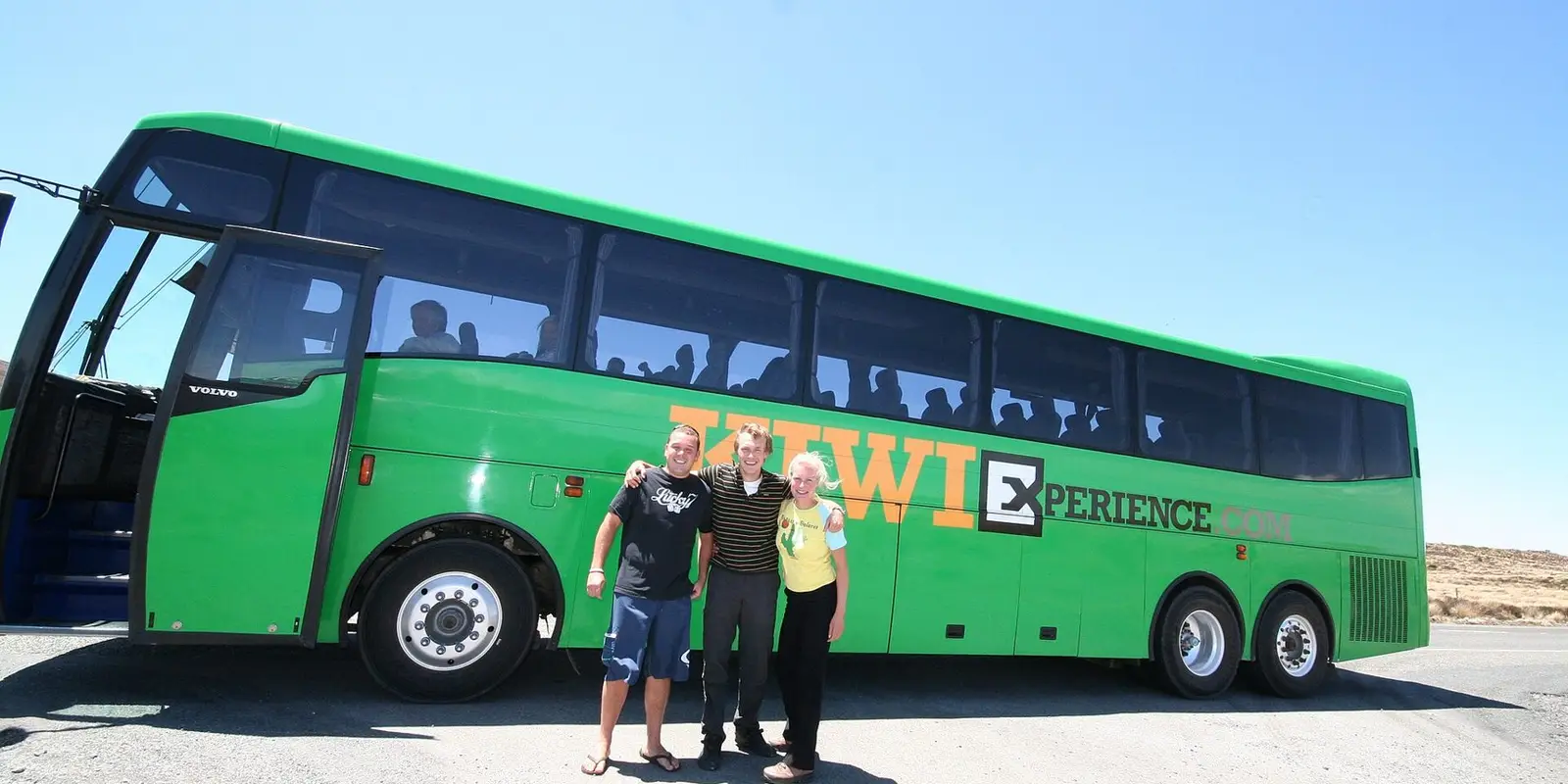
Kiwi Experience runs hop-on hop-off routes for younger travellers. Its Funky Chicken pass covers both islands, starts from NZD 1,749 and needs a minimum of 20 days. It is valid for 12 months and includes two Interislander crossings. Accommodation is not included, with the company pointing to 4 to 6 bed dorms along the way. Winter departures are reduced from May to September.
Stray used to be the main hop-on hop-off rival, but Stray now says it no longer runs hop-on hop-off passes. Instead it runs fixed-date tours with accommodation included. Its Select tours use 3 to 4 star hotels and its Adventure tours use shared accommodation. That makes Stray closer to a small group tour than a bus pass.
Both suit people who want company and a planned route. If you are hostel hopping, our best hostels guide covers places to stay that are not party central.
Pros and cons
Pros
- Cheap for solo travellers. No rental, insurance, fuel or parking to pay.
- No driving stress. Long distances, winding roads and winter conditions are someone else’s problem.
- Wide coverage. Most towns visitors want to reach are on the network.
- Environmentally lighter than driving alone.
Cons
- Timetables rule your day. Some routes run only once or twice a day.
- Trailheads are hard to reach. Many hikes and scenic spots are off the bus network, so you will need shuttles or tours.
- Less spontaneous. You cannot stop for a view or a detour.
- Groups pay more. Two or more people sharing a car often pay less per head.
For two or more people, compare against a car or campervan. Our campervan vs car guide runs the numbers, and you can compare rental cars here: .
Tips for bus travel
A few habits make bus travel in New Zealand much smoother:
- Book the busy legs first. Summer weekends, school holidays and long weekends fill up, so lock in the trips you cannot move.
- Check where the stop is. In some towns the bus leaves from a visitor centre or a street corner rather than a terminal. Confirm the exact spot the night before.
- Be early. Coaches run to a schedule and drivers will not wait long for latecomers.
- Bring food and water. Comfort stops are short and some legs pass through small towns with limited options.
- Download offline maps. Mobile coverage drops out on some rural stretches, so do not rely on streaming the journey.
- Plan connections with a buffer. If you are linking a bus to a ferry, train or flight, leave room for traffic and weather.
- Think about the last mile. Hostels and motels near the main stop save you a taxi with a heavy pack.
Who the bus suits
Bus travel works best for people who are travelling solo or as a couple, are happy to base themselves in towns for a few nights, and plan to join tours for things like glacier walks, cruises and wildlife trips. It also suits anyone nervous about driving on the left, or visiting in winter when alpine roads can be icy.
It works less well for hikers chasing remote trailheads, photographers who want sunrise at a lookout, and families with lots of gear. In those cases a car or campervan is usually the better fit, and you can always mix the two: bus between cities, then hire a car for a few days in the region you most want to explore.
Combining bus with ferries and trains
A bus trip pairs well with the scenic trains. Many people take the Northern Explorer from Auckland to Wellington, the Interislander across Cook Strait, then buses in the South Island. Our scenic trains guide has timetables and prices, and you can check ferry fares here: .
Whatever you choose, book early for summer, keep your luggage light, and leave a buffer day before flights in case of delays.
FAQ
Is the InterCity FlexiPass worth it?
Does the FlexiPass include the Interislander ferry?
How much luggage can I take on an InterCity bus?
Is Stray still hop-on hop-off?
Is bus travel in New Zealand cheaper than renting a car?
Sources
Last checked 11 November 2026
- About us · InterCity
- Carry-on and checked luggage · InterCity
- Buy a FlexiPass · InterCity
- FlexiPass ideas · InterCity
- Funky Chicken · Kiwi Experience
- Hop on hop off · Stray